Most financial advisors will tell you that a bad credit score is a permanent scarlet letter that locks you out of the modern economy. They’re wrong. While a low score certainly makes life more expensive, it doesn’t make borrowing impossible; it just means you have to stop looking at traditional banks and start looking at the mechanics of risk.
The problem isn’t that you can’t get money. The problem is that you’ll likely pay a premium for the privilege of doing so. People often mistake a lack of options for a lack of possibility. If you’re sitting on a 500 credit score, you aren’t invisible to lenders; you’re simply a different type of asset that requires a different kind of math to evaluate.
Traditional lenders want certainty. They want a history of perfect payments and low debt-to-income ratios. When you don’t have those, you are essentially asking a stranger to bet on your future behavior rather than your past mistakes. That’s a much harder sell, but it is one that specialized lenders are increasingly willing to make.
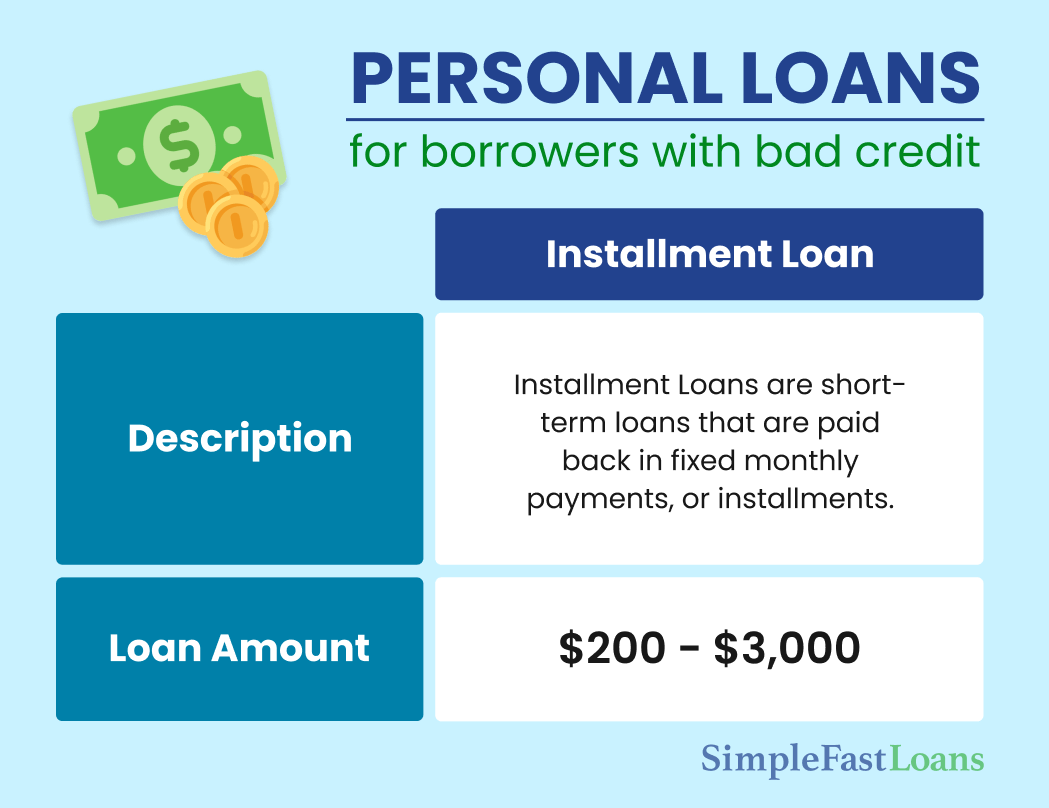
If you need immediate liquidity for a car repair or a medical bill, you might find that personal micro loans offer a more realistic path forward than walking into a local credit union and hoping for a miracle. These smaller amounts are designed for the exact type of “bridge” financing that people with imperfect credit often require.
Decoding the Math of High-Risk Lending
Lenders don’t hate you; they just hate uncertainty. When a bank looks at a borrower with a low score, they aren’t looking at the person; they’re looking at a probability. They use statistical models to guess how likely it is that you will stop paying them back in six months. If the math says you are a high risk, they don’t say “no,” they say “yes, but at a higher interest rate.”
This is where the cost of capital becomes a very real, very painful thing. A person with a 750 score might get a loan at 7% APR. A person with a 520 score might be looking at 28% or even 35% APR. The difference between those two numbers isn’t just a statistic; it’s the difference between owning your car in three years or being stuck in a debt cycle for a decade.
You have to be clinical about this. If you take a high-interest loan to fix a problem that will immediately result in more debt, you’re just digging a deeper hole. But if you use that loan to consolidate a high-interest credit card or to fix a car so you can get to work, the math actually works in your favor. It’s a tool, and like any tool, it can be used to build something or to destroy it.
Understanding the “why” behind a rejection is helpful. Often, it isn’t just the score. It’s the “thickness” of your credit file. A thin file means you haven’t had much credit in the past. A bad file means you have had credit, but you didn’t manage it well. Lenders view these two things very differently. One is a lack of data; the other is a history of volatility.
Where the Money Actually Lives
Not all debt is created equal, and not all lenders are looking for the same thing. If you are a business owner struggling to keep the lights on, you shouldn’t be looking at personal loan products at all. Instead, look toward government-backed options. For instance, the Small Business Administration offers low-interest loans designed to help businesses and homeowners recover from declared disasters.
There is a massive difference between a personal loan and a business loan. Personal loans are based on your individual capacity to pay. Business loans are based on the cash flow and viability of your company. If you try to use a personal credit card to fund a startup, you’re making a massive tactical error that will eventually catch up to you. The interest rates are too high and the liability is too personal.
For the average person, though, the landscape is mostly digital now. You won’t find many people walking into a branch to ask for a $1,000 personal loan. Most of this activity happens through fintech companies that use “alternative data.” They look at your bank account activity, your utility payment history, and even how you use your smartphone to determine if you’re a good bet.
This is a double-edged sword. On one hand, it opens doors for people who were previously ignored. On the other, these lenders are often much faster and much more aggressive with their terms. You can get the money in 24 hours, but you might find the repayment schedule is incredibly demanding. It’s a trade-off between speed and stability.
| Lender Type | Typical Requirements | Speed of Funding | Interest Rate Trend |
|---|---|---|---|
| Traditional Banks | High Credit Score (680+) | Slow (Days/Weeks) | Lower |
| Credit Unions | Membership Required | Moderate | Moderate |
| Fintech Lenders | Varied (Focus on Cash Flow) | Very Fast (Hours) | High |
| Payday Lenders | Minimal | Instant | Extremely High |
The Trap of the “Quick Fix” Loan
There is a specific type of predatory behavior in the lending market that targets people when they are at their most vulnerable. These are the lenders who promise “no credit check” or “guaranteed approval.” These are rarely actually helpful. They are often just a way to bypass the regulatory protections that keep interest rates from reaching astronomical levels.
If you find yourself looking at a loan where the interest is calculated daily or weekly rather than annually, run. That is a sign of a debt trap. These loans are designed to be impossible to pay off. They rely on the fact that the borrower will only pay the minimum, and the minimum is designed to never touch the principal balance. It is a mathematical certainty that you will end up paying back five or ten times what you borrowed.
But, there is a way to use these products safely. If you know exactly how much you need, and you know exactly when you will pay it back, you can use a high-interest loan as a surgical tool. It’s a temporary fix for a specific, time-sensitive problem. (I once saw a man use a high-interest bridge loan to fix a transmission, which allowed him to keep his job, which allowed him to pay the loan in three months. It worked perfectly for him, but only because he had a plan.)
The key is to look at the APR, not the monthly payment. Lenders love to talk about the “small monthly payment.” They want you to think, “Oh, it’s only $50 a month.” They won’t mention that you’ll be paying that $50 for the next three years, totaling $1,800 on a $1,000 loan. Always do the math on the total cost of the loan before you sign anything. The total cost is the only number that matters.
Navigating the Application Process
When you apply for a loan with bad credit, you are essentially conducting a sales pitch. You aren’t just asking for money; you are arguing that you are a safe bet. This requires more than just a “yes” or “no” from a computer. You need to be prepared to show the reality behind the score. If your score is low because of a medical bill that was eventually settled, you need to be able to prove that.
Preparation is the only way to mitigate the damage of a low score. Before you apply, check your report for errors. A single incorrectly reported late payment can drop your score by 50 points. If you find an error, dispute it immediately. You shouldn’t be paying interest on someone else’s mistake. It sounds simple, but many people skip this step and just accept the bad terms.
You should also look into “secured” options. If you have a car or a savings account, a secured loan uses that asset as collateral. This lowers the risk for the lender significantly. Because the risk is lower, the interest rate is usually much lower than an unsecured personal loan. It’s a way to buy your way into better credit terms by putting something on the line.
Lastly, don’t be afraid to ask for a “pre-qualification.” This is a soft credit pull that doesn’t affect your score. It allows you to see what the interest rate would be without actually applying for the loan. If the number they give you is 35%, you know it isn’t worth the effort of a full application. It saves you from unnecessary inquiries that can further depress your score.
The Reality of Debt Recovery
Getting a loan is the easy part. Managing it is where most people fail. If you use a small personal loan to cover a gap in your budget, you have essentially just pushed your problem into the future. You haven’t solved the underlying cause of why you needed the money in the first place. If you don’t address the spending or the income issue, you’ll be right back in this position in six months.
It is helpful to look at how other sectors handle debt and recovery to understand the importance of stability. For example, the Small Business Credit Survey provides insight into how even large, established firms manage credit and the challenges they face in maintaining liquidity. Even businesses with hundreds of employees struggle with the timing of cash flow. If they have to manage it, you have to manage it too.
The goal of using a loan with bad credit should always be “rehabilitation.” You are using the loan to stabilize your situation so that your credit score can rise. This might mean paying down a collection, settling a medical bill, or consolidating high-interest debt. If the loan doesn’t directly contribute to a higher score or a more stable budget, it is a bad loan.
Debt is a tool for movement. It should move you from a state of crisis to a state of stability. If the loan moves you from one crisis to another, you aren’t using debt; you are being used by it. Treat your credit like a high-stakes game of chess. Every move has a cost, and every move must have a purpose.
Don’t borrow money to feel better; borrow it to be better off.